
Several years ago, I coached a highly successful executive who unexpectedly lost his job.
One day he was the CEO. The next day he was the former CEO.
Lots of heavy emotions came quickly: shock, regret, anger, embarrassment, disappointment, fear, shame, and self-doubt. He replayed every conversation, every decision, every meeting. He constantly wondered what people were saying. He imagined former colleagues discussing his departure. He feared his career might be permanently defined by that moment.
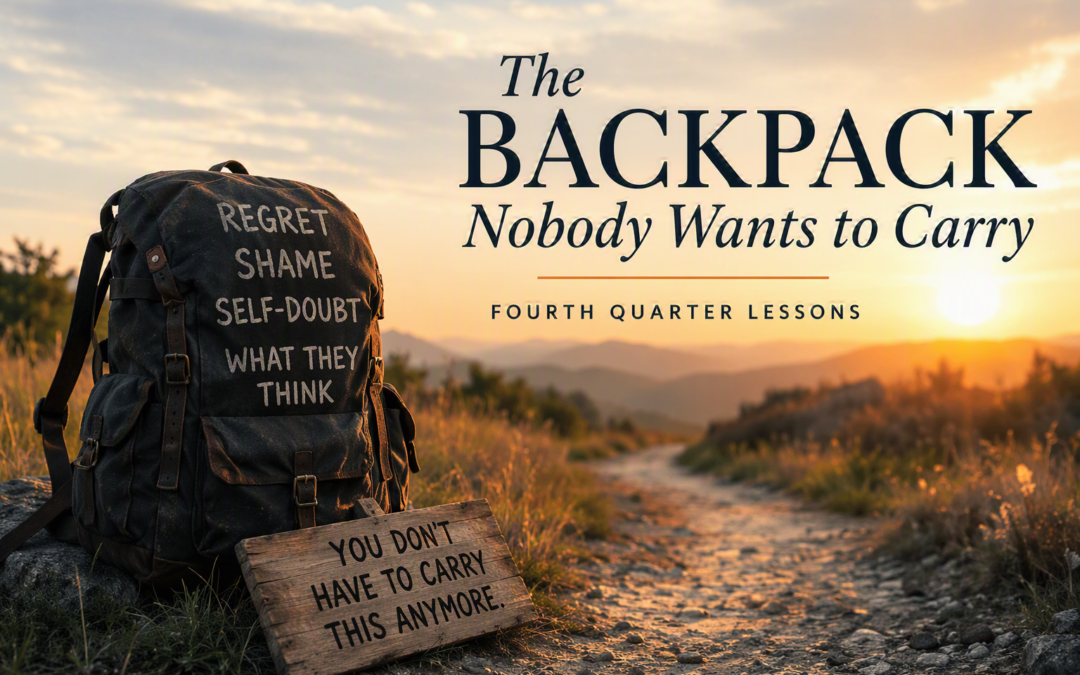
All this weighed on him—like a heavy backpack no one ever wants to carry.
During one of our coaching conversations, I asked him a simple question: “How often do you think other people are thinking about what happened?”
His answer was, “All the time.”
But the truth was very different. People talked about his departure for about a week, and then they moved on. Not because they didn’t care. Not because they were insensitive. But because work (and life) simply kept moving forward, so they did, too.
There were new meetings, new problems, new opportunities, and new stories competing for their attention—and there was a new leader.
The fired executive was still replaying the movie long after the audience had left the theater.
All this reminds me of a personal lesson I learned years ago.
When I lived in Columbus, Georgia, I served as president of a large Kiwanis Club. It was a meaningful season in my life. It helped define me as a community leader. Then I moved away. Five years later, I returned for a visit to the club. As I walked into the meeting, several members greeted me warmly: “Marc! Good to see you!” “Where have you been?” and “We haven’t seen you in a while!”
The funny thing was they acted as if I had been gone five weeks, not five years!
That day I learned something that has stayed with me ever since: One of the hardest lessons in adulthood is discovering that the thing we think defines us often occupies very little space in other people’s minds.
The executive I was coaching eventually came to understand this truth, too. The job loss felt so life-defining to him because he was still stuck living it when everyone else had moved on.
Once he accepted that reality, something changed. He stopped asking, “What are people thinking about me?” And he started asking, “What do I want to do with the rest of my life?”
That’s when healing began.
He networked. He explored new opportunities. He reconnected with friends. He spent more time with family. Eventually, he found a new CEO role and discovered that the experience that once felt devastating had actually become one of the most important growth periods of his life.
The job loss was real. The pain was real. But the shame was optional.
Many of us find ourselves carrying heavy backpacks we don’t need to carry. A failed business. A firing. A divorce. A public mistake. A deal that fell apart. A season we wish we could erase.
The backpack gets heavier the longer we carry it. But we can choose to set it down.
Recognizing yourself in this situation is key. Acknowledge that something bad occurred. It happened. It was painful. It matters. But it also is in the past. And your future deserves more attention than your past.
Life is simply too short to spend years carrying a burden nobody else is asking you (or expecting you) to carry. Put the backpack down, then straighten up and keep moving forward.
Recent Comments